STYLE-SHEET


ABOUT THIS STYLE SHEET

The School of Music Style Sheet is for the use of students enrolled in most MUSC-coded
academic courses offered in the School of Music. It provides guidance for the presentation
of essays and other written items of assessment. It may also be used by postgraduate
research students in the preparation of critical commentaries or theses. Some MUSC courses,
including those in Music Therapy, have different requirements concerning scholarly style,
the presentation of essays, and, in particular, the documentation of sources. In such cases,
consult the lecturer or tutor concerned.1

The Style Sheet covers various matters related to academic writing about music, including
aspects of presentation, formatting, terminology, referencing and citation. Examples given
throughout are oriented specifically to music-related studies and writing.


The Style Sheet is divided into several sections. Section 2 concerns the presentation of
undergraduate essays and assignments; it may be ignored by postgraduate students. Section 3
covers various issues of scholarly writing for music-related undergraduate essays as well as
postgraduate work in musicology and related areas. Section 4 discusses the basics of the
MLA system of parenthetical documentation. It also outlines issues relating to plagiarism
and the ethical necessity of source documentation. Section 5 concerns the use of footnotes in
an essay which uses mainly parenthetical documentation. (Those wanting to use footnotes as
the method of documentation should consult section 8.) Section 6 outlines, in general, the
information required for citations of various works. Section 7 provides a series of examples
of citations of different types of work, such as might be found in music research. Section 8
outlines the use of footnotes as an alternative to documentation by parenthetical references
and is probably of more interest to postgraduate students........

~ Friday, April 2, 2010 0 comments

Blocking Engineering Experiments - Part 03

Design of Engineering Experiments
Part 3 – The Blocking Principle

  • Text Reference, Chapter 4
  • Blocking and nuisance factors
  • The randomized complete block design or the RCBD
  • Extension of the ANOVA to the RCBD
  • Other blocking scenarios…Latin square designs

2

The Blocking Principle

  • Blocking is a technique for dealing with nuisance factors
  • A nuisance factor is a factor that probably has some effect on the response, but it’s of no interest to the experimenter…however, the variability it transmits to the response needs to be minimized
  • Typical nuisance factors include batches of raw material, operators, pieces of test equipment, time (shifts, days, etc.), different experimental units
  • Many industrial experiments involve blocking (or should)
  • Failure to block is a common flaw in designing an experiment (consequences?)


3

The Blocking Principle

  • If the nuisance variable is known and controllable, we use blocking
  • If the nuisance factor is known and uncontrollable, sometimes we can use the analysis of covariance (see Chapter 15) to remove the effect of the nuisance factor from the analysis
  • If the nuisance factor is unknown and uncontrollable (a “lurking” variable), we hope that randomization balances out its impact across the experiment
  • Sometimes several sources of variability are combined in a block, so the block becomes an aggregate variable


4

The Hardness Testing Example

  • Text reference, pg 120
  • We wish to determine whether 4 different tips produce different (mean) hardness reading on a Rockwell hardness tester
  • Gauge & measurement systems capability studies are frequent areas for applying DOX
  • Assignment of the tips to an experimental unit; that is, a test coupon
  • Structure of a completely randomized experiment
  • The test coupons are a source of nuisance variability
  • Alternatively, the experimenter may want to test the tips across coupons of various hardness levels
  • The need for blocking.....................

~ 0 comments

JAPANESE-STYLE GARDEN


JAPANESE-STYLE GARDEN is a knowledge for design garden. This is very interesting for studied. JAPANESE-STYLE GARDEN is kind of something different than else-style garden, because JAPANESE-STYLE GARDEN made your own garden unique and satisfied for life.


General Sites
JGarden
http://www.jgarden.org/
This site offers a wide variety of information about
Japanese gardens. It features a “garden of the month”
(usually generously illustrated with photos) and a
database of Japanese gardens. It is a non-profit,
educational project aimed at raising awareness of
Japanese gardens.
Special Feature: Japanese Gardens
http://web-japan.org/nipponia/nipponia8/special.html
This site notes that landscape gardening in Japan has had
a 1,300-year history, so naturally Japanese gardens come
in many different styles. This special feature of Nipponia
magazine looks at the Japanese love of gardening, and
what it is about landscape gardens that people find
especially appealing. See also “Creating Gardens”
(http://web-japan.org/nipponia/nipponia8/sp03.html) in
the same issue.

Japanese Garden
http://mcel.pacificu.edu/as/students/chee/garden.html
Provides a general overview of Japanese gardens and
includes numerous pictures.
Japanese Garden Design Principles: On the path
toward a successful garden
http://www.helpfulgardener.com/japanese/2003/design.ht
ml

Discusses the basic design principles of Japanese-style
gardens.....

~ 0 comments

Interior Design

Interior Design is a very interest for studied, because Interior Design determining a room and make something different feeling for a new design in your room. Interior Design very impotent for your satisfied life...

~ Thursday, April 1, 2010 0 comments

ASCII Art

ASCII art

The venerable figlet program, a true mainstay of ASCII art, is able to render ASCII fonts. If you don't know what that could possibly mean:

             /)   ,              ,  /) /)      /)         ,  /)
_/_(/ _ _ _ // // _ // _ __ //
(__/ )__(_/_)_ (_(/ _(_(/_(/_ (__(/_(_(_/ (__(_/(_ (_/_
/) .-/
(/ (_/

~ Tuesday, March 30, 2010 0 comments

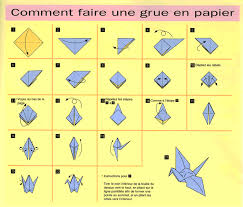
Origami Swan

Origami is a magic stage illusion with a Japanese paperfolding theme that was designed by Jim Steinmeyer. In the 1980's Illusion builder John Gaughan refined the concept and constructed the first version for Doug Henning.

The magician displays a 12-inch cube that sits on top and near one end of a rectangular table, with a mirror standing vertically at the opposite end (as the magician says, "so you can see the back of the box at all times"). The magician opens the top of the box which is hinged at one side, and proceeds to unfold the sides, enlarging the box until it is about twice as long and touching the mirror, and about twice as tall.

The lady assistant steps up onto the table and then into the box. After she crouches down inside the box, the magician dramatically folds the box back into a 12-inch cube, which appears to be too small for the woman to fit inside.

The magician then takes three swords and stabs them through slits in the center of each face of the box; the first from front to back, the second from one side to the other side, and then stands on the table to insert the third sword from top to bottom.

The magician rotates the table around a full circle to show all sides. Then he removes the swords, unfolds the box once again to its full size, and the lady steps out unharmed.

For example to make a swan with a piece of paper:


source site: http://en.wikipedia.org/wiki/Origami_(magic_trick)

~ Monday, March 29, 2010 0 comments

Design

Design is the planning that lays the basis for the making of every object or system. It can be used both as a noun and as a verb and, in a broader way, it means applied arts and engineering (See design disciplines below). As a verb, "to design" refers to the process of originating and developing a plan for a product, structure, system, or component with intention[1]. As a noun, "a design" is used for either the final (solution) plan (e.g. proposal, drawing, model, description) or the result of implementing that plan in the form of the final product of a design process[2]. This classification aside, in its broadest sense no other limitations exist and the final product can be anything from clothing to graphical user interfaces to skyscrapers. Even virtual concepts such as corporate identity and cultural traditions such as celebration of certain holidays[3] are sometimes designed. More recently, processes (in general) have also been treated as products of design, giving new meaning to the term process design.

The person designing is called a designer, which is also a term used for people who work professionally in one of the various design areas, usually also specifying which area is being dealt with (such as a fashion designer, concept designer or web designer). Designing often requires a designer to consider the aesthetic, functional, and many other aspects of an object or a process, which usually requires considerable research, thought, modeling, interactive adjustment, and re-design. With such a broad definition, there is no universal language or unifying institution for designers of all disciplines. This allows for many differing philosophies and approaches toward the subject. However, serious study of design demands increased focus on the design process.
source site: http://en.wikipedia.org/wiki/Design

~ Sunday, March 28, 2010 0 comments

Best Design of The Crocodile Leather Desk

Best design of the crocodile leather desk. The desk is very elegant for your daily work or your business. Design this desk is not wow! but the idea is briliant..!! I like the desk and the acessoris. I think, this desk cool for place in your room . Inovatif and creatif for the desk in design world ever...


~ 0 comments

Staircase Design

Staircase Design and Decoration Information

Interior Design - Stairs Graphic

The staircase is a permanent feature of interior design. It is not a part of the house that can be changed easily when you feel like redecorating. Therefore if you are building a new home careful consideration needs to be taken to select the correct materials, design and construction of your stair case, so that it is either a design feature of the home or purely a functional section of the house construction.

Source site: http://www.interiordezine.com/


~ 0 comments

NEW DAY

This is a New Day for me. Because I am start to write on my blog wall. I am happy be able to back at blogger. The New Day is very importent to me and my family. I have a daughter her name is Farras Mukita Rabi'i. She is beautiful not like her mother, hehe... Why?? Because she have pointed nose, so she is not like me. New Day begin now!!!
Thank you...

~ Saturday, March 27, 2010 0 comments